
Rules governing how a person is expected to believe, behave, think, speak, dress, love, question, worship, vote, marry, raise children and sometimes even how they are permitted to feel.
Some rules are written.
Many are not. They are simply understood.
Religious Abuse
Sometimes the deepest wounds are inflicted in the name of God.
Religious abuse is everywhere. Sometimes it is obvious. Sometimes it looks like condemnation, threats, humiliation, exclusion, punishment, exploitation, or an authority figure using God to control another human being.
But often, it is far more subtle.
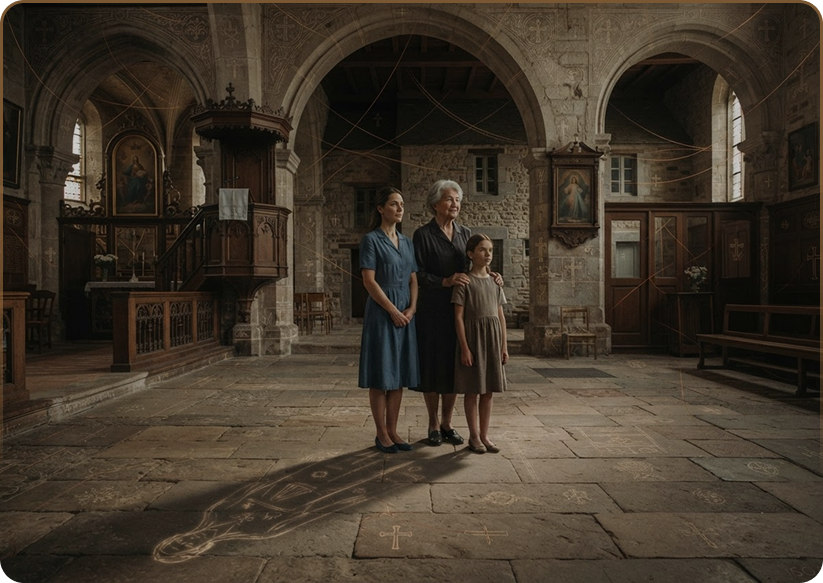
The questions religion avoided
Religion can begin as an attempt to understand God and gradually become a system of rules.
You learn what questions can be asked.
You learn which ones cannot.
You learn what emotions are acceptable.
You learn what doubts should remain private.
You learn what kind of person receives approval.
And you learn what happens when you step outside the boundaries.
That is where spirituality can become control.
Obedience confused with faith
Compliance becomes the proof of belief, and questions become the evidence of rebellion.
Conformity confused with holiness
Looking like everyone else becomes indistinguishable from becoming like Christ.
Fear confused with reverence
Dread of punishment gets renamed as awe, and nobody is allowed to notice the difference.
Approval confused with God
The acceptance of religious people begins to feel like the acceptance of the Divine itself.
The invisible rules
Some of the most powerful religious rules were never written anywhere.
You simply knew them.
- Don’t question the pastor.
- Don’t challenge the doctrine.
- Don’t embarrass the family.
- Don’t admit you’re angry with God.
- Don’t say the teaching doesn’t make sense.
- Don’t associate with those people.
- Don’t trust your intuition if it conflicts with what you’ve been taught.
- And perhaps most importantly: don’t become someone we don’t understand.
The punishment isn't always formal.
The implication can become unmistakable: belonging requires conformity. That can be an extraordinarily powerful form of control.

That is not spiritual guidance. That can become spiritual coercion.
God is watching.
God is disappointed.
God will punish you.
God may reject you.
God may condemn you.
Your family may reject you.
Your church may reject you.
Your community may reject you.
And eventually, you may learn to reject yourself.

Those messages can become embedded so deeply that decades later, an adult may intellectually reject the religion while still emotionally living underneath its rules.
The church may be gone. The pastor may be gone. The parents may be gone. But the voice remains.
- Whether they are safe.
- Whether they are worthy.
- Whether their thoughts can be trusted.
- Whether their body can be trusted.
- Whether their questions are dangerous.
- Whether love is unconditional.
- Whether belonging can disappear.
- And whether God is something to experience or someone to fear.
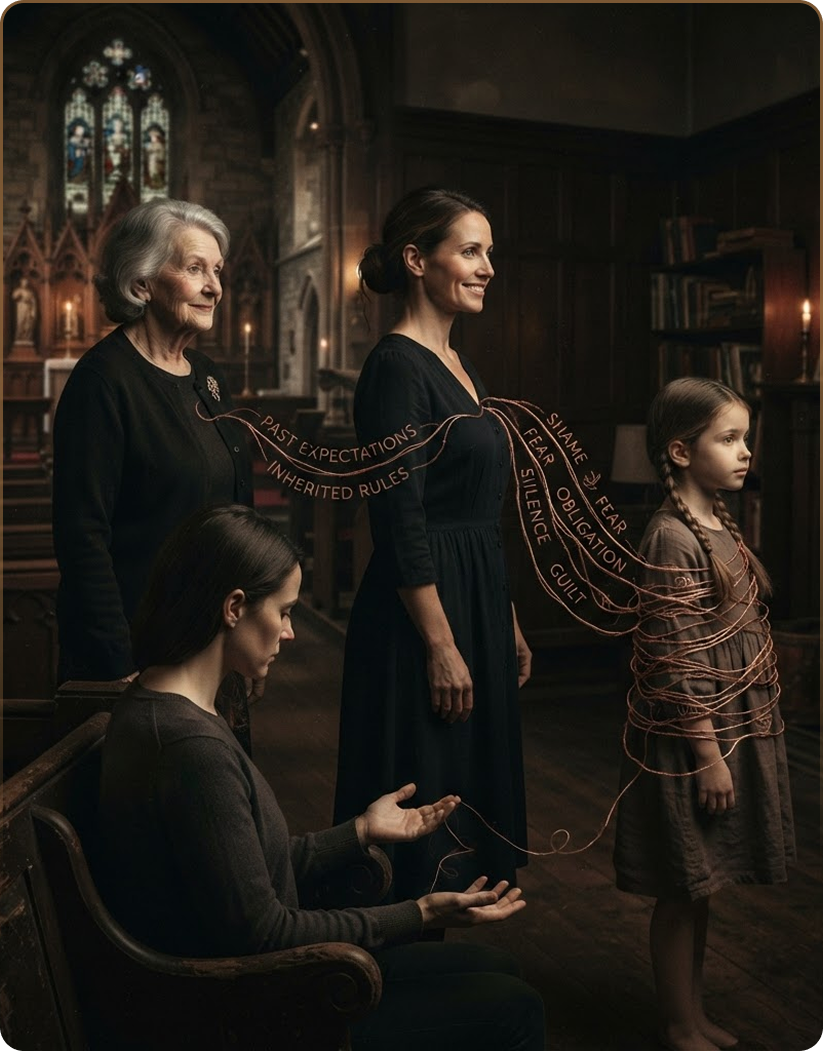
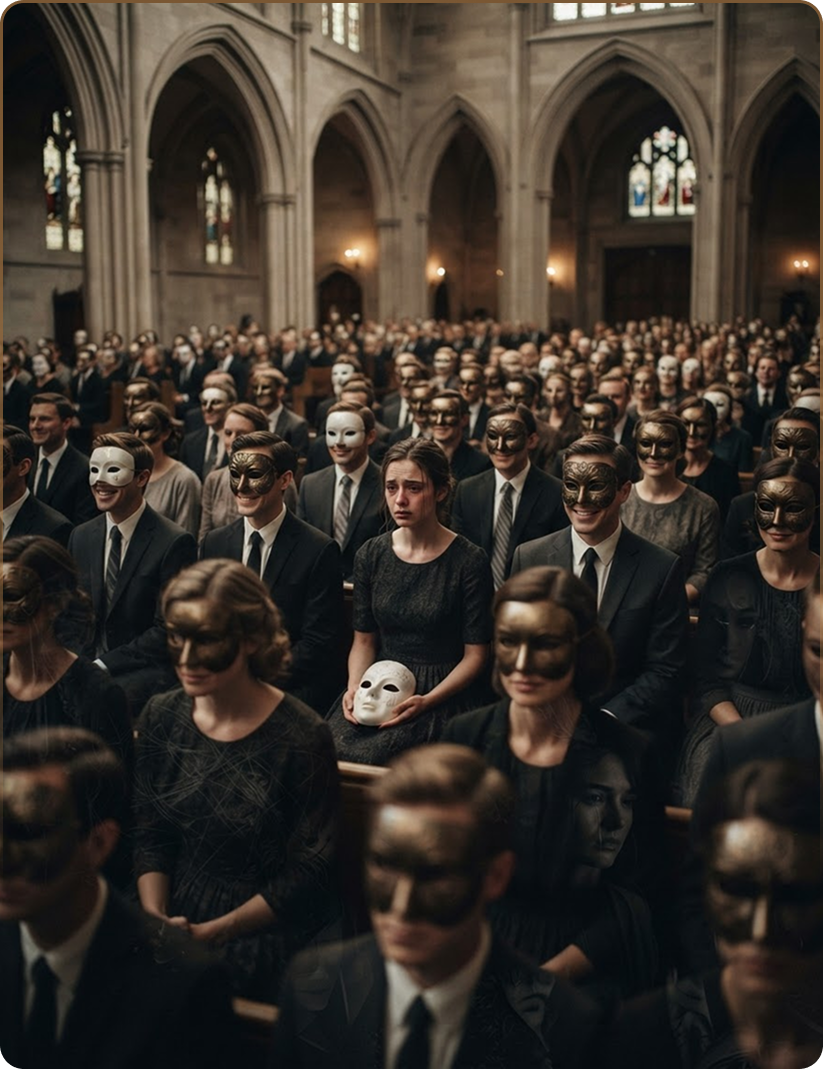
What religious abuse can leave behind
For some, it fades. For others, it remains for decades.
- Fear of judgment.
- Fear of hell.
- Fear of questioning.
- Fear of disappointing God.
- Fear of disappointing family.
- Difficulty trusting yourself.
- Shame surrounding your body or sexuality.
- Perfectionism.
- People-pleasing.
- Anxiety around authority.
- Difficulty establishing boundaries.
- A constant feeling that you are somehow doing life wrong.
And sometimes an inability to separate God from the people who claimed to speak for God. That may be the deepest wound of all. Because when people misuse God, some people don’t merely lose trust in the institution. They lose their relationship with the sacred altogether.
Maybe you didn't walk away from God
Maybe you walked away from fear.
Maybe you walked away from manipulation.
Maybe you walked away from hypocrisy.
Maybe you walked away from somebody else's interpretation of God.
Maybe you walked away from a system that required you to become smaller in order to belong.
And maybe what felt like losing your faith was actually the beginning of discovering it for yourself.
There is a profound difference between rejecting God and rejecting what human beings told you about God. You are allowed to investigate that difference.


Your spiritual life belongs to you, too.
You were given beliefs before you were old enough to examine them. Now you are.
You were given rules before you understood who created them. Now you can ask.
You were given answers before you even knew the questions. Now the questions belong to you.