Love
The theme he returned to most. The frequency he taught us to live from.

Two thousand years of doctrine, ritual, and fear were built on top of what Yeshua actually taught. Underneath all of it, his message keeps returning to three themes — love, fear, and consciousness.
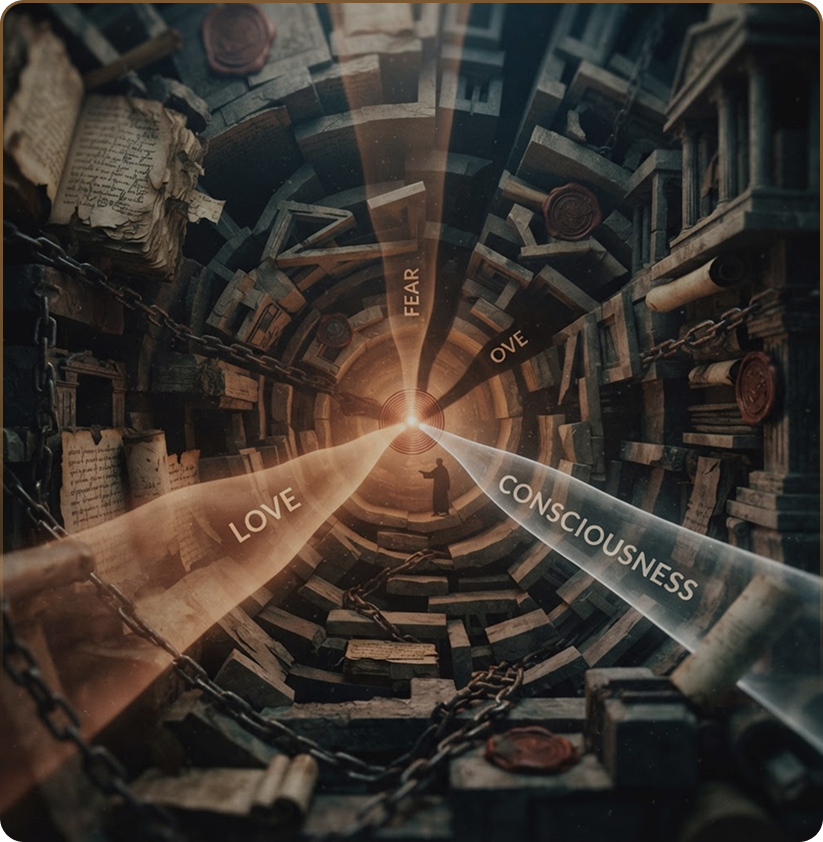
Read the words attributed to Yeshua without the centuries of institution stacked on top, and something striking happens: the same handful of ideas keep surfacing, again and again, in story after story.
He did not spend his time building doctrine, drafting rules, or founding an organization. He told stories. He healed. He confronted the religious authorities of his day. And underneath nearly everything he said, three themes run like a current: love, fear, and consciousness.
Those three were the message. Everything the religion added afterward — the hierarchy, the gatekeeping, the fear of hell, the endless rules — buried them. To recover what he actually taught, you don’t need more doctrine. You need to return to the three things he kept coming back to.
The theme he returned to most. The frequency he taught us to live from.
The thing he told us, more than almost anything else, to release.
Awareness of your own thoughts — and of the power that awareness unlocks.
Take them one at a time.

Of every theme in the words attributed to Yeshua, love appears the most—the love word family surfaces seventy-three times across his recorded teaching. Love God. Love your neighbor as yourself. Love your enemies. Love one another the way he loved. Again and again, it is the note he keeps returning to.
And he did not mean love as a soft sentiment or a rule to be obeyed. He meant it as a state of being the highest frequency a human being can operate from. The condition that heals, forgives, releases, and creates. Something available to anyone, in any tradition or none, requiring no institution to grant it and no gatekeeper to mediate it.
If love was what he told us to move toward, fear was what he told us to release—and he said it directly, over and over. Fear not. Be not afraid. Why are ye fearful? It is one of his most repeated instructions, returned to again and again across his teaching.
Counted honestly: fear-related words appear about thirty times in his recorded teaching but many of those are parables where he speaks as a character. Set those aside, and roughly twenty are direct challenges to fear: fear not, be not afraid, why are ye fearful. Not the popular ‘365 times’ myth—just what the words actually show.
Why would that be his most repeated instruction? Because fear is the state that runs the show when consciousness is asleep. Fear makes people small, obedient, and controllable. It keeps them looking outside themselves for rescue. A frightened person is easy to rule — and a religion built on fear of hell had every reason to keep people afraid. Which is the exact opposite of what he taught. And love and fear are not two unrelated topics. Scripture ties them together directly:

They are opposite states. You are, in any given moment, operating from one or the other. To move toward love is to move out of fear — and moving out of fear is the whole assignment.

Love and fear survived, in weakened form. The third theme is the one the institution buried almost completely because it hands the power back to you.
Consciousness. Not a word Yeshua used in English, but the reality underneath what he pointed at again and again: awareness of your own thoughts, accountability for those thoughts, and awareness of the power that comes with waking up to them.
He spoke constantly about the inner condition rather than outward performance. He said defilement comes not from what enters a person but from what rises out of the heart. He located the kingdom of God not in a temple, not in the sky, but within the very people asking where it was. He told his followers that faith the size of a mustard seed could move mountains — that the deciding factor was the state and conviction inside them, not the circumstance outside.
The pattern is all over his words. He spoke of believing some ninety times, of receiving nearly as often, and of asking dozens more “Ask, and it is given.”, believe that you receive and you will. Again and again he pointed to the condition inside a person as the thing that shapes what comes to them. Not doctrine to memorize. An inner state to take charge of.
This is the part modern teachers describe in newer language: that your thoughts and your emotional state are not passive weather happening to you, but the vibration you are broadcasting and becoming. That you are accountable for what you think, because what you think, felt and repeated, shapes what you live. Consciousness is the practice of waking up to that, and taking ownership of it.
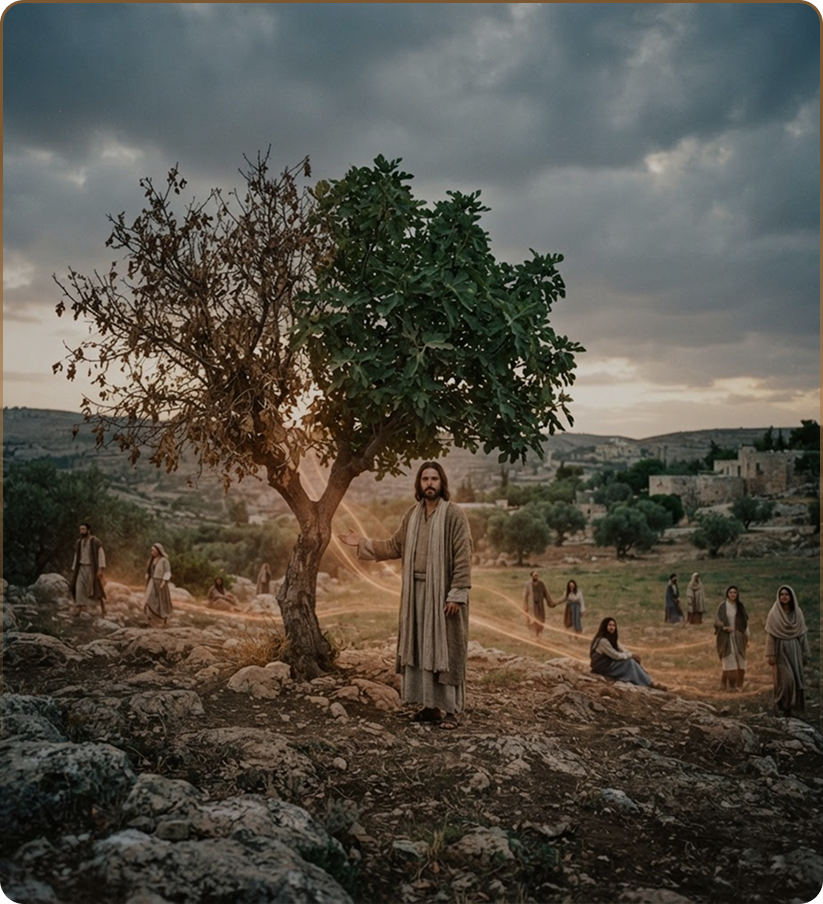
There is a moment where he speaks to a barren fig tree and it withers. The disciples are astonished. And his response is the key to the whole teaching He doesn’t say, ‘Behold what only I can do. He says the opposite:
This is the same voice that said his followers would do the works he did, and greater. Over and over he pointed at himself not as the exception, but as the example — the demonstration of what a human being aligned in love, free of fear, and awake in consciousness is capable of.
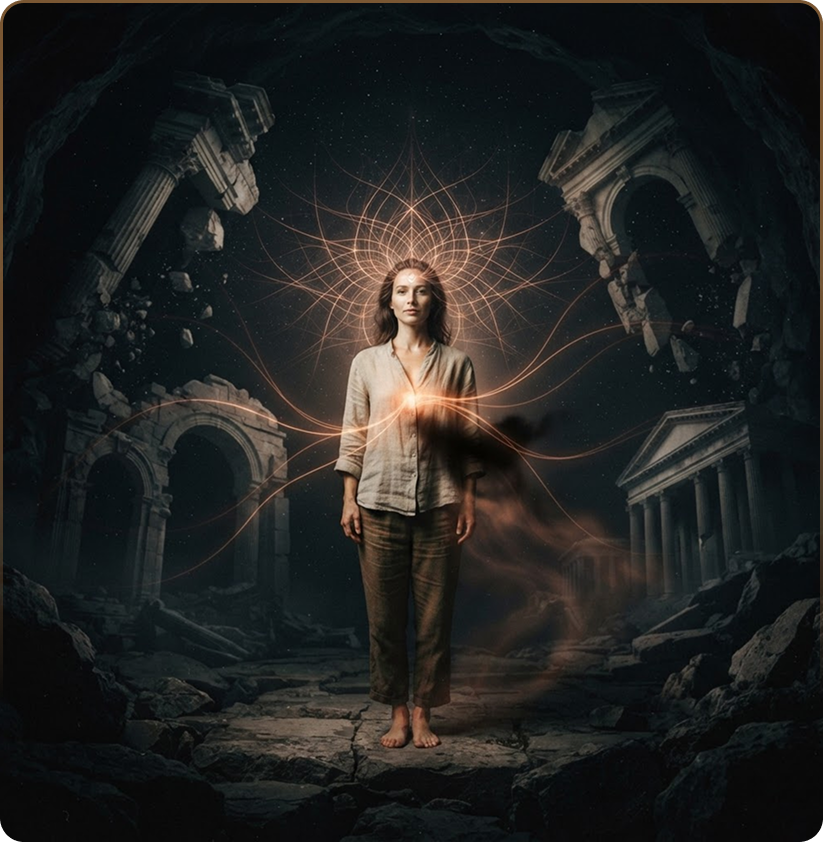
You don’t need permission, a building, or a mediator to live these. They are available right now, in the only place they were ever located: within you.
Move toward love. Make it the state you operate from, not a rule you follow. Release fear. Notice it, name it, and choose the higher state — again and again, the way he said. Wake up in consciousness. Become the aware, accountable thinker of your own thoughts, and take ownership of the vibration you are living in and creating from.
Love, fear, consciousness. That was the real message. Not the doctrine that was built on top of it — the three quiet, world-changing truths underneath.